At home · Lighting
How to Choose Kitchen Pendant Lights: Size, Fit and Installation
Measure the space above the counter or table and check where the existing ceiling boxes are. Then compare fixture dimensions, drop length and installation requirements. Make sure the lights fit the room and the wiring before ordering.
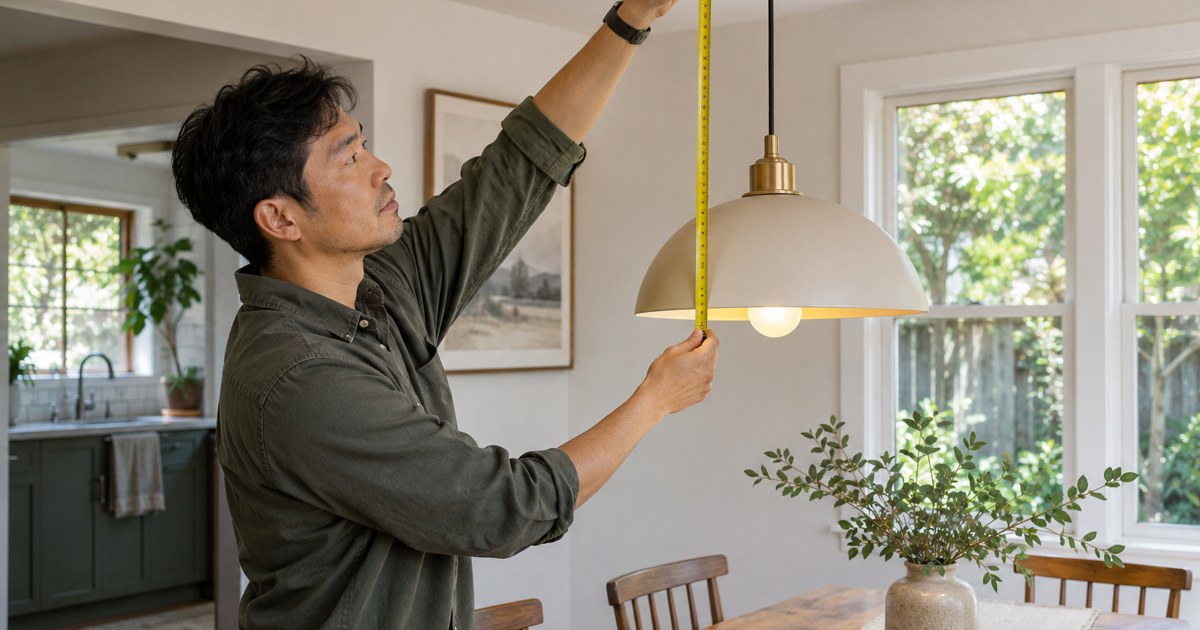
Imagine choosing between two small pendants and one wide fixture over your island. Tape paper outlines at the proposed height and sit where a guest would sit. If the wide outline cuts across your view, try two smaller ones spaced apart. Mark the existing ceiling boxes on your sketch and have an electrician check support, wiring and control compatibility before ordering either option.
Give each fixture a job
The kitchen island
Light the work surface
Compare shades that direct light toward the counter. Check how the fixture looks from a seated position, especially if the bulb is visible.
The dining table
Make room for conversation
Judge the fixture from across the table as well as from the doorway. Note whether the shade or exposed bulb falls in the usual sightline.
The entry
Start with clearance
Open the door and check the route through the hall. Look at flush and semi-flush fixtures if a hanging fixture would take up too much room.
Try out the size before you order
Mark the island or tabletop dimensions and the locations of the existing ceiling boxes. Sketch the proposed fixtures to scale on paper. A wide shade and a narrow cylinder can have the same listed height but look entirely different in the room. Include the canopy and any parts that remain visible above the shade.
Use a paper outline to picture the shade at the proposed height. Stand where you prepare food, sit where guests will sit and look from the next room. If several fixtures will hang together, sketch the spaces between their edges as well as the spacing between their centers. The 1-800Lighting pendant guide provides starting points for comparing size and placement. Check the fixture instructions and have an electrician confirm the installation plan.
Compare the light you will see
A clear shade shows off the bulb, which can be striking in a room where the fixture is part of the decor. A more opaque shade can change where you see the light. Look at the product photos from multiple angles and check whether the maker gives information about light distribution. Room photography is useful for scale and mood, and the specifications tell you what comes in the box.
Write down the bulb type, maximum rating, and whether the light source is replaceable or integrated. For dimming, check the fixture and bulb documentation together with the control you plan to use. If the listing says dimmable, look for the control type or compatibility list before assuming an existing switch will work. Choose the light color with the rest of the room in mind, especially when several fixtures will be on at once.
Open the box before the installation appointment
Inspect the finish, glass and included parts while the original packaging is still intact. Make sure the selected size and finish match the order. Capitol Lighting's published return policy describes a 90-day window for eligible items, a 10% return fee and original packaging requirements. Installed or modified fixtures and some other categories are excluded. Ask the retailer how it handles a damaged or incomplete shipment before the installer arrives.
Compare the whole order, including bulbs, controls, delivery and the quoted installation work. If the job needs new wiring, a moved ceiling box or extra support, get that priced before you decide between fixtures. The finish and shape are the enjoyable part. A shortlist that includes the installation details lets you choose those with more confidence.
Compare a pair of pendants with one larger fixture
Imagine the same island with two small shades and with one wide fixture. The pair creates two separate pools of light and puts more hardware in view. The wider option can make a stronger visual statement. Check the maker's light distribution information, because the number of shades alone cannot tell you how evenly either layout will light the work surface.
For the pair, price both fixtures and ask whether the ceiling can support that layout from the available mounting points. For the larger fixture, check its weight, canopy size and the span between any supports. If either option requires a different electrical layout, ask for the quote before comparing the product prices. On paper, put a sketch of each option beside the complete installed total.
Leave one line for what you still need to confirm
Before ordering, circle any missing measurements, uncertain finish details or unanswered installation questions. A product image can suggest a color, but screens and room lighting change how finishes look. Ask about a sample or showroom viewing if the match matters. Save the exact model and finish so the installer and retailer are working from the same information.
Measure the space and check the fit
Write down the available width, ceiling height and the existing mounting location. Compare those measurements with the exact fixture dimensions and the manufacturer's installation instructions. For hanging fixtures, check the adjustment range and the clearance needed in your space.
Check compatibility before choosing
Review the bulb or integrated light source, any dimmer requirements and the product's rating for the intended indoor, damp or outdoor location. Confirm included parts and any separate accessories. For hardwired work, have a qualified electrician assess the installation and any changes needed before you buy.
Compare the complete order
Put the model number, finish, quantity, bulbs, accessories, shipping charges and installation costs on one list. Check whether the item is in stock, the expected delivery window and how damage or missing parts must be reported.
Editorial research updated November 10, 2026. This guide uses published product and purchase information.
Shop 1-800Lighting
Check delivery to your U.S. or Canadian address and confirm the current purchase terms.